It’s one of the most common worries parents have about early reading. Your child knows their letter sounds. Point to s and they say /s/, every time. But write sat and they say “/s/… /a/… /t/…” and then nothing. Or they say a completely different word.
If this sounds familiar, you are in very good company. Blending is a genuinely hard step, and many children take weeks or months to get there. This guide explains what’s going on and gives you practical things to try.
Why blending is hard
To blend, a child has to do several things in quick succession:
- Look at each letter and recall its sound.
- Hold those sounds in memory, in order.
- Push them together and hear the word they make.
- Recognize that word as one they know.
A breakdown at any step stops the whole process. The good news is that you can usually spot which step is causing trouble, and work on that.
First, check what’s going wrong
Watch your child try a few words and notice what happens.
- They hesitate on the sounds. If they have to think about each letter’s sound, there’s no room left for blending. Work on sound recall first.
- They say the sounds but forget the first one. Memory is overloaded. Try shorter words or blend in chunks.
- They say “suh-a-tuh”. Extra “uh” sounds are getting in the way.
- They say a different word that starts with the same letter. They’re guessing from the first letter instead of using all the sounds.
- They can’t blend even when you say the sounds aloud. The difficulty is with hearing sounds, not reading letters. Work on oral blending.
Eight things to try
1. Go back to oral blending
Put the letters away for a while. Say a word in sounds, like a robot, and ask your child what word you said: “/m/ /u/ /g/.” Use objects in front of you so your child has a clue. Start with two sounds (/u/ /p/), then three. Practice a few minutes a day, in the car, at dinner, in the bath. Many children who struggle with written blending find it clicks once oral blending is easy.
2. Clean up the sounds
Make sure everyone in the house is saying pure sounds: /m/, not “muh”; /t/, not “tuh”. Stretchy sounds (/s/, /m/, /f/, /n/, /l/) should be held long; bouncy sounds (/t/, /p/, /k/, /b/, /d/, /g/) should be short and quiet. Our guide to letter sounds in order explains how to say each one.
3. Start with stretchy words
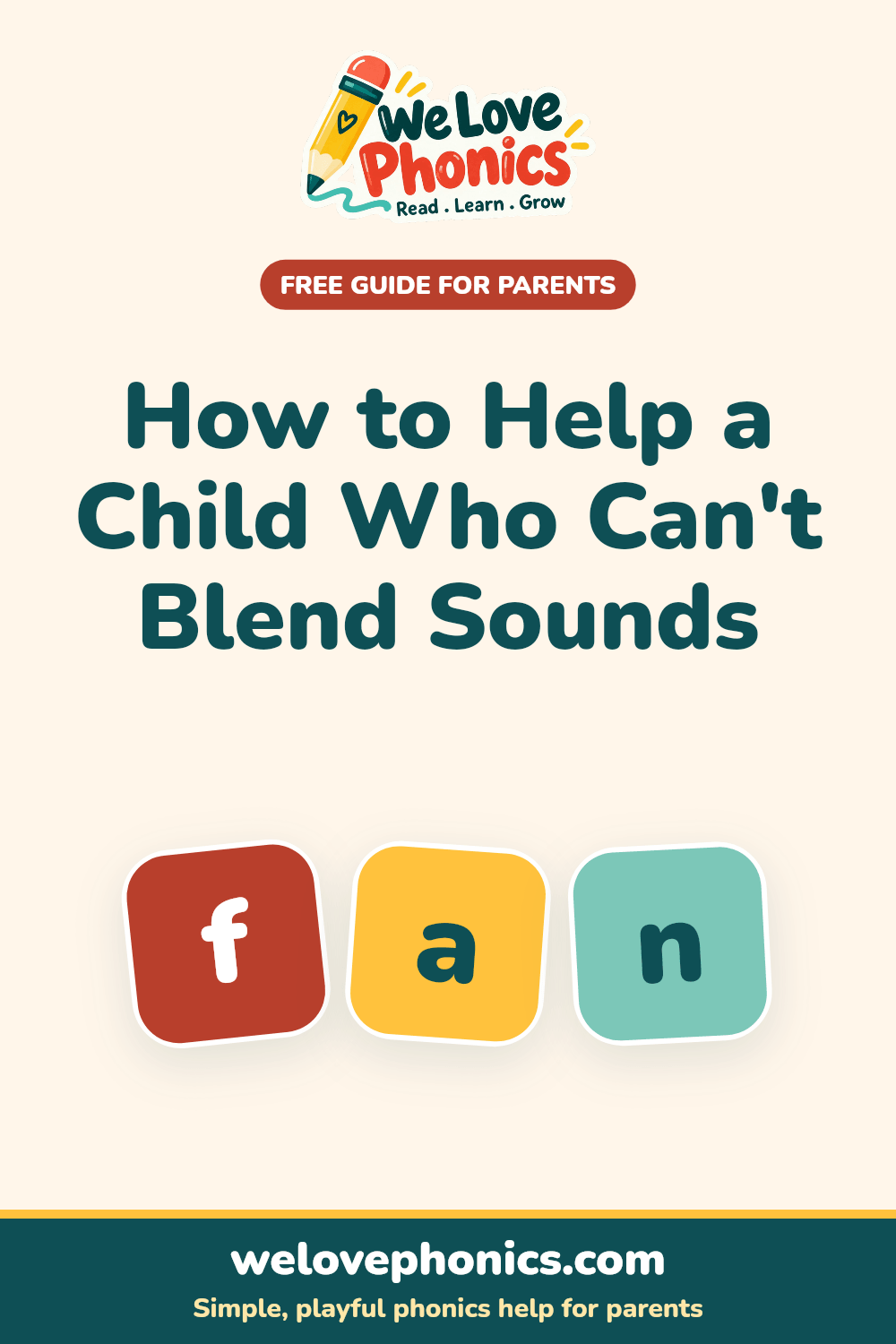
Choose words that begin with a stretchy sound, like sat, mat, fan, nap, lip. Instead of separate sounds, stretch the whole word out with no gaps: “sssaaat.” Then say it a bit faster, and faster again, until it pops out as sat. Avoid words starting with bouncy sounds at first, because they force a gap.
4. Blend in chunks
Rather than three sounds at once, do the first two and then add the last: “/s/ /a/… sa. Sa… /t/… sat.” This halves the memory load.
5. Use two-letter words
Go back to at, in, up, it, on. Once those are easy, add a first sound: at becomes sat, mat, cat. Your child only has to blend one sound onto a chunk they already know.
6. Keep sound recall fast
If your child hesitates on letter sounds, do quick daily flashcard reviews of the sounds they know. When sound recall is instant, there’s more brain space left for blending.
7. Make the words familiar
Use words your child knows and uses: mom, dad, cat, dog, bed. A blended word that means nothing to your child is hard to recognize even when the blending is right.
8. Show, then share, then step back
Do the blending yourself first, two or three times, while your child watches. Then do it together. Then let your child try alone. Being shown what success sounds like matters.
Try this tonight
Stretchy snake words
- Draw a long wiggly snake on paper and write sat along its body, spacing the letters out.
- Run your finger slowly along the snake while your child says the sounds without stopping: “sssaaat.”
- Run your finger faster, then faster again, until the word pops out.
- Try mat, fan and nap on new snakes.
The snake makes a continuous sound feel natural, which is often exactly what a stuck child needs.
What to avoid
- Pushing through frustration. If your child is upset, stop and do something fun. Come back tomorrow.
- Long sessions. Five focused minutes is better than twenty frustrated ones.
- Adding new letters. Pause new sounds and practice blending with the ones your child knows.
- Comparing. Siblings, cousins and classmates will blend at different ages. That’s normal.
- Letting them guess. Gently cover pictures and point back to each letter.
How long until it clicks?
There’s no set timeline. For many children, blending clicks suddenly after a period of short, regular practice: one day it’s hard, and the next week they’re reading words. For others, it builds more gradually. Keep practicing for a few minutes on most days and watch for small signs of progress, like blending two-letter words or getting the first two sounds together.
When to ask for advice
Talk to your child’s teacher if you’ve been practicing regularly for several months and see little progress, or if your child is finding it much harder than other things they do. A teacher can tell you how your child is doing in school and what they’re working on.
Talk to your pediatrician if you have any concerns about your child’s hearing or speech, or if reading difficulties run in your family. Early advice is always worth asking for; it doesn’t mean anything is wrong.
We can’t assess or diagnose any child, and nothing in this guide replaces advice from a professional who knows your child.
A simple two-week plan
If you want structure, try this for two weeks, about five to ten minutes a day.
- Days 1–3: oral blending only. Robot talk with two-sound words (up, in, at), then three-sound words for things in the room.
- Days 4–6: quick sound review, then stretchy two-letter words (am, in, on), using the snake game below.
- Days 7–10: three-letter words starting with stretchy sounds (sat, mat, fan, sip), blending in chunks if needed.
- Days 11–14: mix in words that start with bouncy sounds (tap, pin, dog) and read a few words on cards from our CVC words list.
Keep a quick note of which words your child blends without help. Seeing the list grow is encouraging for both of you. If your child is enjoying it, add a game from our phonics games for 4-year-olds as a reward at the end of each session, and see how to teach blending for more methods.
Free: CVC word cards
Simple three-sound words with a dot under each sound. Use them for the stretchy snake game and chunk blending.
Frequently asked questions
Why can my child say letter sounds but not blend them?
Blending takes more than knowing sounds: a child has to hold them in memory and hear them as one word. Oral blending games, clean sounds and stretchy words often help.
Is it normal for a 5-year-old not to blend yet?
Many five-year-olds are still learning to blend. Children develop at different rates. If you’re concerned, talk to your child’s teacher.
Should I stop teaching new letter sounds until my child can blend?
It usually helps to pause new sounds for a while and practice blending with the sounds your child already knows well.
Can oral blending help with reading?
Yes. Hearing sounds and blending them aloud, without letters, is the foundation for blending written words.